Southern California Wildfires Signal a New Era: Why Innovation Is No Longer Optional
September 19, 2025 — Disaster insights | Insurance insights


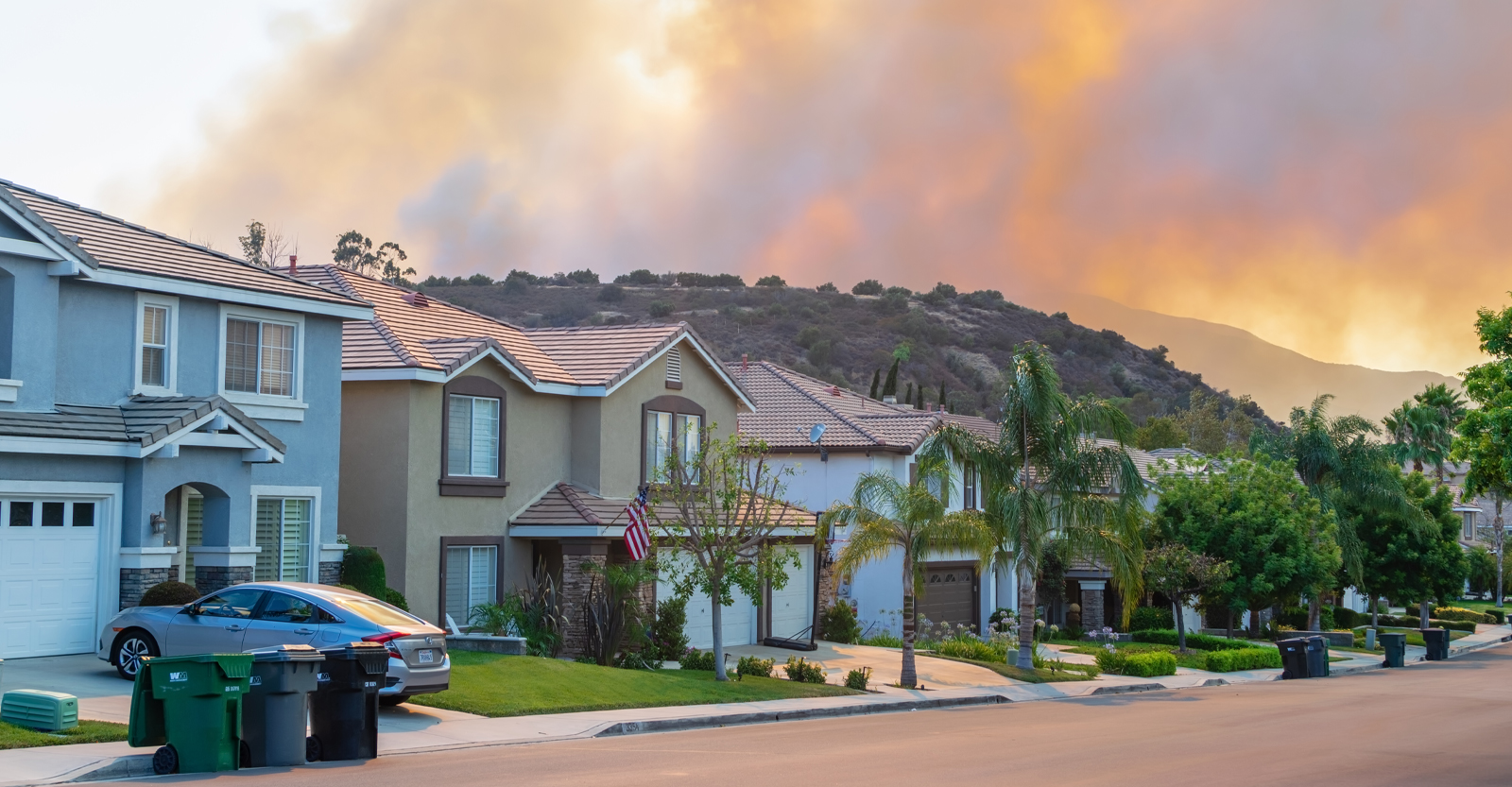
In January, the Southern California Wildfires destroyed approximately 57,000 acres of land and forced the evacuation of over 200,000 California residents. Fourteen separate fires damaged or destroyed more than 16,000 homes or structures. The Eaton Wildfire and Palisades Wildfires were the largest, ranking the second and third most destructive in Los Angeles history.
Estimated insured losses from these fires reached a record $40 billion—half of all global insured losses in the first half of 2025—places these fires among the 10 costliest natural disasters ever recorded by Swiss Re, according to the Insurance Journal.
The traditional approach to wildfire prevention and resilience won’t prepare communities for today’s wildfire reality because the threat itself has fundamentally changed. Fires now burn hotter, move faster, and last longer, stretching across seasons once thought safe. The result is not just record-breaking property losses—it’s families displaced for months, neighborhoods reduced to ash in hours, and communities struggling to rebuild against increasingly impossible odds.
So how do we protect more homes and families, help survivors recover more quickly, and prevent total losses?
True wildfire risk resilience demands innovation. That means rethinking risk models, investing in advanced detection technologies, adopting fire-resistant building practices, fostering collective mitigation efforts, and building a claims response that matches the speed and scale of today’s wildfire threat.
The New Reality of Wildfire Risk
According to NASA research, wildfire activity has doubled worldwide. A 21-year study shows wildfires are more frequent, more intense, and larger—especially in the temperate conifer forests of the Western U.S., spanning the Pacific Coast and Cascade Mountain ranges in Washington, Oregon, and California.
As weather patterns change, wildfire season is growing longer and dangerous. High heat, low humidity, and strong winds are driving more “fire weather” days—conditions that make wildfires harder to prevent and control. Data from 51 years indicate fire weather conditions now last for two months longer than in the 1970s, significantly widening the window for extreme fire activity, according to Climate Central.
Beyond Data: Families at the Center of Disaster
Behind every data point are real households navigating the risks and realities of these devastating wildfires.
“The morning started like an average day—and then all of a sudden it wasn’t,” said Dan, who, along with his wife and six-year-old daughter, lost everything in the Palisades Wildfire.
He left for work in the morning, and by the evening, he saw news footage of his neighborhood and knew his house was a total loss. “I didn’t think I was never going to see it again,” he said.
Earlier in the day, his wife called when she received the evacuation notice. They both just assumed it was a precaution. “The winds were so bad they couldn’t fly any of the planes,” he said. “There was just no chance to stop it. It just raged through.”
Dan, who grew up on the hurricane-prone East Coast, knew the importance of having a disaster plan and evacuation bag ready. But like so many others, he believed their home would be safe. Based on the wind direction and their distance from the forest, evacuation felt more like a precaution than a real threat.
“We didn’t grab our passports, didn’t grab any of our documents. We had it all ready to go, but we didn’t take it because we thought we’d be back.”
“So, we lost everything,” Dan said. “We lost so much.”
Dan and his family’s property and belongings were all covered under his homeowners policy with SageSure, and they are beginning the process of rebuilding. But his advice to everyone is: “You want to hope for the best, but you should plan like it’s the worst.”
Dan is one of the more than 200,000 California residents affected by the Southern California Wildfires, whose stories of loss are all too similar. Protecting families like Dan’s requires new tools, stronger strategies, and a bold shift in how we prepare for wildfires.
The Case for Innovation in Wildfire Prevention and Recovery
Wildfires are changing faster than traditional response models can handle. Strategies designed for slower, more predictable disasters no longer meet today’s realities. To protect communities and maintain market stability, insurance providers have an opportunity to lead by advancing prevention and resilience.
Deliver Earlier, Smarter Alerts
Evolving fire behavior outpaces legacy wildfire risk maps and rating models. Wildfires now move faster than many emergency alert systems can track, so early detection is critical.
By partnering with advanced detection technology providers—using satellite imagery, AI pattern recognition, and hyperlocal weather data—insurance providers can help warn policyholders earlier, giving them extra minutes to evacuate and safeguard their property.
Provide Mitigation Opportunities
New building materials, ember-resistant home designs, and vegetation management technology can significantly increase the chances of a home surviving.
Yet many homes in high-risk zones are still built with vulnerable materials. Insurers can drive safer choices by offering premium discounts or grants for upgrades, such as Class A fire-rated roofing, ember-resistant vents, and defensible landscaping—reducing loss severity and strengthening entire communities.
Scale Claims Response
When a wildfire strikes, speed matters—not just for claims handling but for community recovery. Insurers can improve post-fire resilience by:
Proactive Response
Pre-staging catastrophe response teams in high-risk areas ahead of peak fire season allows insurers to act faster when disaster strikes—accelerating claims processing for a quicker recovery.
Advanced Damage Detection
Drone and satellite imagery technology allows insurers to safely survey fire-damaged areas, even when they are inaccessible to adjusters on the ground. High-resolution imagery helps identify the extent of property damage faster, prioritize resources, and speed up the claims process—putting homeowners on the path to recovery sooner.
Remote Policyholder Support
Digital tools and remote services simplify recovery for homeowners. Online claims submissions and real-time tracking streamline the process, while remote adjusters can assess and process claims from anywhere. Virtual support channels—text, email, and video conferencing—provide step-by-step guidance through damage assessment, paperwork, and recovery, reducing delays and stress during critical moments.
Automated Claims Processing
Technology can verify claim details quickly, analyze damage documentation, detect fraud by flagging unusual patterns to speed up payouts, and reduce errors—freeing adjusters to focus on complex claims.
Resilience-Focused Rebuilding Incentives
Encouraging homeowners to incorporate fire-resistant features into repairs and renovations not only reduces the risk of future wildfire damage but also helps lower insurance claims and premiums over time. These incentives can include discounts for using ember-resistant roofing, fire-resistant siding, non-combustible decking materials, defensible space landscaping, and other mitigation measures.
Maintain Insurance Accessibility
Maintaining affordable, available coverage in high-risk regions is a core opportunity for carriers and regulators to lead as wildfire risks evolve. Insurers can better manage escalating loss costs—driven by increased claim severity, prolonged fire seasons, and higher reinsurance rates—and protect long-term market sustainability with proactive strategies. Innovation can help carriers to stabilize premiums, preserve coverage options, and remain active in high-risk markets—ensuring property owners retain access to the protection they need.
Insurance Access Shapes Resilience
Few people understand the importance of insurance accessibility like Mike, a property insurance agent and homeowner who lived in the Palisades. He evacuated with his wife, two teen daughters, and dog, and waited anxiously for days to learn the fate of his home.
When they were able to return to their property, they discovered the burn scar was within 100 feet of their patio. Their house was still standing, but extensive smoke damage left them facing an uncertain recovery.
“Our house would have been one of the first to go down in the neighborhood if it did, and so the smoke damage was pretty bad,” Mike said. Fortunately, his SageSure homeowners policy covered the damage and helped restore their home.
As an insurance agent, Mike understands the challenges of the market firsthand. “A lot of people paid less money for their insurance because in California, everyone was getting dropped, and everyone had to replace their policies.”
Many of his clients opted for less coverage for cost-saving reasons. “Insurance is all about price until you have a claim,” Mike said. “I chose to pay a little more for good coverage.”
And he couldn’t be more grateful that he had options.
“If I had looked to save some money and gone to a (California) FAIR plan or whatever, I would have had a very unsatisfactory claim process,” Mike said. “And a lot of my clients are going through that.”
Mike’s advice: “Get the best coverage you can possibly get because it matters if you have a claim,” he said. “It matters what type of company you have behind you.
Mike’s experience highlights the importance of sustainable, accessible insurance. As wildfire risks grow more destructive and costly, providing homeowners with reliable coverage and practical options is essential to protecting both households and communities.
Adapting to Protect the Market
Wildfires are no longer rare or seasonal—they’re an evolving, year-round threat. The insurance industry is well positioned to respond, with the tools, data, and established relationships needed to support policyholders.
Maintaining access to coverage in wildfire-prone regions requires several coordinated efforts: advanced risk modeling, applying new technologies in underwriting and claims, and aligning carrier incentives with mitigation measures that reduce losses. Progress in these areas is essential to preserving market stability, protecting solvency, and keeping coverage affordable for the most exposed risk.
The choice is clear: innovation isn’t just about staying competitive. It’s about saving homes, protecting lives, and building resilience for the future.
 Back to Insurance Insights